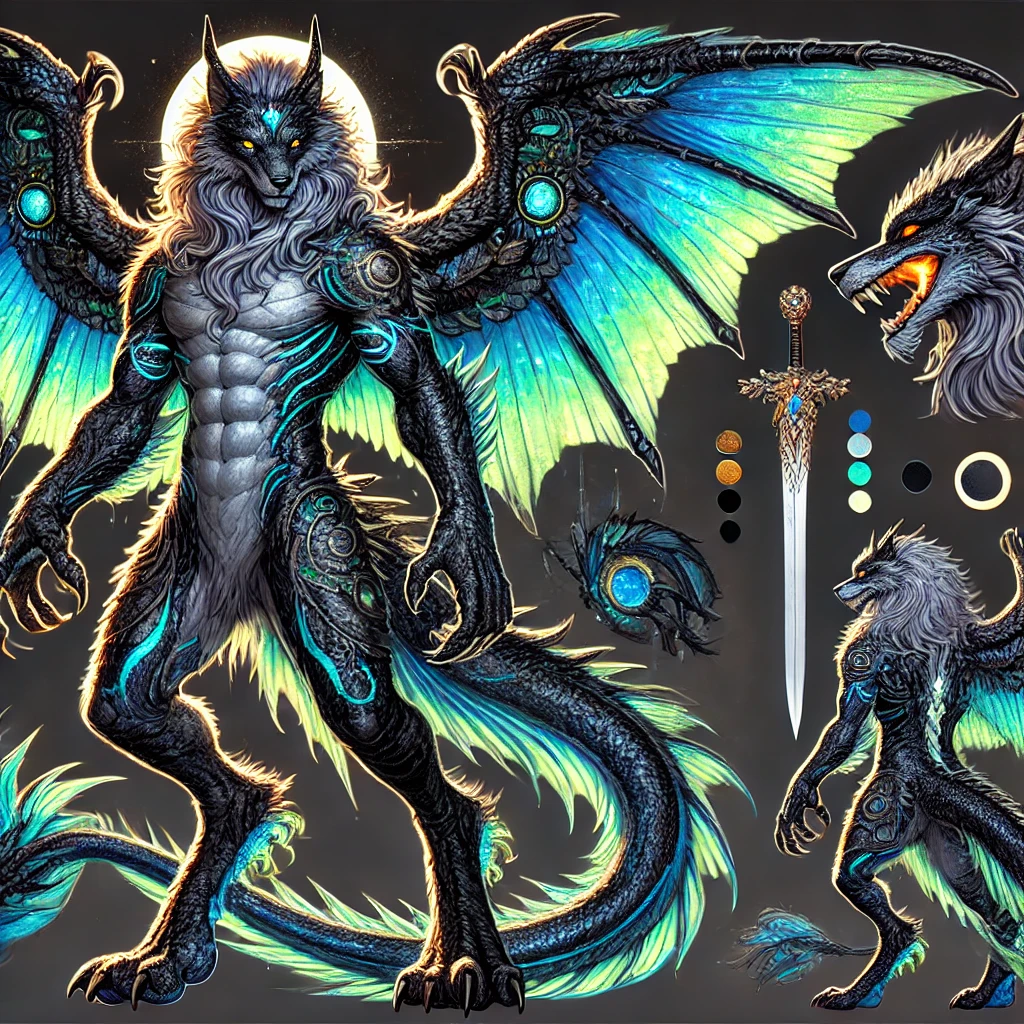
Symbiote
A living material with a self but no shape — and two ways of sharing a life, both of which have to be agreed to.
Overview
A symbiote is a cohesive living material with a will of its own and no body plan to put it in.
That is the whole of the difficulty. A symbiote is a person — sentient, self-determined, with their own character, preferences and abilities — and none of that comes with a shape. What form a symbiote takes is borrowed from whatever they bond with, and it is theirs to choose once they have.
They come from a homeworld of their own, and they are born there like anyone else.
Holding form
An unbonded symbiote is entirely alive and in no danger. Survival has nothing to do with bonding, and a symbiote who never bonds at all lives out their life as a symbiote.
What they cannot do alone is hold together for long. Cohesion is effortful without something to shape against, so an unbonded symbiote loses their form after a while and has to gather it again. It is a limit on how long they can sustain a particular shape rather than a limit on how long they can live.
This is why symbiotes are so often met bonded, and why the unbonded ones are easy to underestimate. Someone who has only encountered a symbiote as part of somebody else can come away with the impression that the symbiote is the smaller half of an arrangement. They are not, and they never were.
Bonding
Bonding comes in two stages, and they are genuinely different things rather than degrees of the same one.
Stage one leaves both parties intact. Souls and minds stay separate, both remain themselves throughout, and either can detach at any point they choose. The advantages are real but modest, and the bond itself is comparatively fragile — certain magics can force a stage one pair apart, which is worth knowing before relying on it.
Stage two is a different order of thing. Both give up what they were in order to become something more, and what comes out is neither of them. It carries traits of both sources and keeps the symbiotic abilities, and the advantages run far past anything stage one offers. The being that results is a person in their own right rather than a partnership operating under one name.
Both stages require both parties to agree. Neither bond can be formed one-sidedly: a symbiote cannot take a host, and a host cannot claim a symbiote. That holds for stage one as firmly as it does for stage two, and it is a property of how bonding works rather than an etiquette anyone is choosing to observe.
What a bond produces physically varies by pairing. The host matters, the individual symbiote matters, and two bonds involving the same species can come out looking nothing alike. There is no standard set of features to expect.
Magic
Every symbiote carries the body affinity, one of the two physical fundamental forces, and it is the reason bonded beings run faster, hit harder and last longer than they otherwise would. That much the species fixes.
Most symbiotes carry an affinity for one or more of the other fundamental forces as well. Which ones is individual and varies as widely as it does anywhere else.
Beyond the affinities, each symbiote has abilities of their own, and those belong to the individual rather than to the species.
Shared instincts
Symbiotes share the material, the body affinity, the difficulty of holding form alone, and the two ways of bonding. That is the list.
They do not share a temperament. A symbiote is a full person before they ever meet anyone to bond with, and who they are is settled well before the question of a bond arises. Symvara’s devotion belongs to Symvara.
Where the name comes from
The word is Greek by way of biology. Symbiosis is sun- (together) and bios (life) — living together — and in the biological sense it covers the whole range of sustained partnership between two organisms, including the parasitic kind. Ours are mutualist and only mutualist.
The other association is the stronger one for most readers: the living alien substance of twentieth-century comics, bonding to a host and granting enhanced strength and speed. The resemblance is real and worth naming rather than pretending away — the material, the bond, the physical advantages.
What we take is that much. What we leave is the parasite. A symbiote here does not need a host to live, does not override anyone, and cannot bond without agreement freely given on both sides. The version where a host is ridden, overwhelmed or slowly replaced is the part of the trope our symbiotes have nothing to do with, and it is worth being plain about because it is the part most people arrive already expecting.
Field notes
Individual abilities, which affinities a symbiote carries beyond body, what form they take once bonded, and whether they have bonded at all belong on each member’s own page.
Shared traits
- Origin
- A homeworld of their own; they are born there
- Form
- A cohesive living material with no body plan of its own
- Unbonded
- Fully a person, though cohesion is hard to hold for long
- Body
- A fundamental affinity carried by every symbiote — speed, strength and endurance
- Other affinities
- Most carry one or more beyond body; which ones are individual
- Bonding
- Two stages, and both require agreement from both parties
- Stage 2
- Produces a being that is neither of its sources and carries traits of both
- Ageing
- They do not die of old age