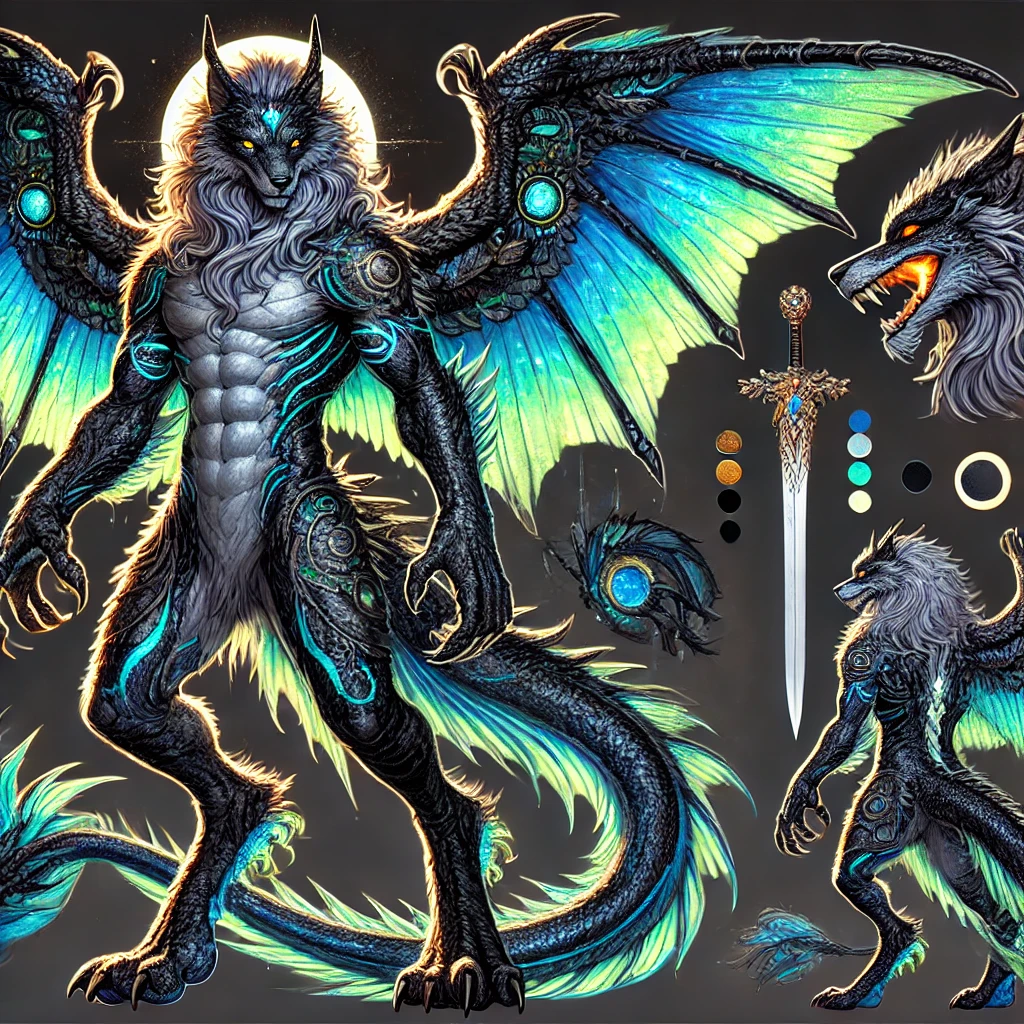
Elemental
A body that is the element — not a body tied to one.
Overview
An elemental being’s body is made of an element. Where another creature has flesh or scale or stone, an elemental being has fire, or water, or earth, or storm — the substance itself, all the way through, and it is what they are built from.
The word points at something far more common than that, so the boundary is worth drawing at the outset: the elemental form is a matter of what a body is made of, and an elemental affinity is a separate thing entirely. A great many people here carry a tie to fire, water, earth or storm, some as individuals and some by descent. That tie is an ordinary part of the magic system, and it leaves the body exactly as it was. The next section sets the two apart properly, and it is the most important thing on the page.
What makes someone elemental
The test is composition, and composition alone. An elemental being’s body is made of the element — that single fact is the whole of the requirement, and everything else about the form follows from it.
An affinity is a being’s tie to one of the fundamental forces. It is held widely, it is ordinary, and it describes a relationship to a force rather than the stuff someone is built from. Some species and breeds fix an elemental affinity as a plain species trait, which is unusual only in being settled by descent rather than by the individual — the affinity is the same one anyone might carry, and the body underneath it is whatever that species’ body is.
That is where the two come apart, and the gap is wider than it looks. Strength of the tie makes no difference to it, and neither does how the power manifests or how thoroughly the element runs through a lineage. A being with the deepest elemental affinity ever recorded, whose power is unmatched and whose whole species is built around the element, is a being with an affinity: their body is ordinary matter, and this form is not theirs.
They are separate categories, and this guide keeps them separate.
The four elements
The elements available to this form are the four that sit in the elemental group of the fundamental forces: fire, water, earth and storm, where storm covers wind and electricity together.
The list is complete as it stands. Anything resembling a fifth element is either a subset of one of these four or something other than elemental altogether.
Frost is the case that comes up. It sits within water as a subset of it rather than standing in its own right, so a being of that character belongs to the water group. The same reasoning covers anything else that reads as a variation on one of the four.
The affinity that comes with it
An elemental being holds the magycal affinity for the same force their body is composed of. A being made of fire carries the fire affinity, one made of storm carries storm, and so on down the list. The two arrive together.
The direction of that is worth noting. Being elemental brings the matching affinity along with it; holding the affinity brings only itself, and leaves the body where it was.
Magic
Wild magic produced the elemental mutation, and its work was the composition — a body made out of an element, with the matching affinity arriving alongside.
That affinity is the one piece of magic the form hands over, and it is where the form’s reach ends. An elemental being’s species keeps everything it fixes, and whatever else they are tied to is theirs.
Field notes
Which element an elemental being is made of, how that substance looks and behaves in them, and everything else about them belong on their own member page.
Shared traits
- Composition
- The body is literally made of an elemental substance
- Elements
- Fire, water, earth or storm — the four elemental fundamental forces, and no others
- Affinity
- An elemental being also carries the affinity for the force they are made of
- Not the same thing
- Carrying an elemental affinity does not make anyone elemental
- Scope
- Narrow. Literal composition is the whole of the requirement
Members
No members recorded yet.